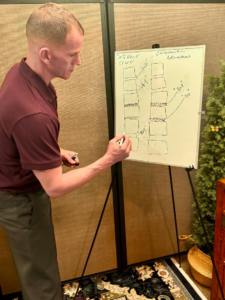
By Dr. Joseph Heinecke, Mountain Valley Chiropractic – Grand Junction, Colorado
Have you ever woken up on a cold or stormy morning and felt like your body suddenly aged overnight? Your back feels tighter, your knees are stiff, or an old injury seems to start talking to you again.
Many people experience weather-related stiffness, especially when temperatures drop or a storm moves in. You may notice your back feels tighter, your knees feel stiff, or an old injury suddenly becomes more noticeable. The exact relationship between weather and pain is still being studied. There are several good reasons why changes in temperature, barometric pressure, and activity levels may influence how your body feels.
Here in Western Colorado, we can experience significant changes in temperature and weather conditions over a relatively short period of time. For people who spend a lot of time hiking, biking, walking, gardening, or otherwise enjoying the outdoors, those changes can also dramatically alter how much—and how—we move.
Barometric Pressure May Affect Sensitive Joints and Tissues
Barometric pressure is the pressure exerted by the atmosphere around us. Before a storm or major weather change, atmospheric pressure often drops.
Your joints, muscles, connective tissues, and nervous system are constantly responding to mechanical forces. Changes in atmospheric pressure have a relatively small effect on the body. However, people with arthritis, previous injuries, or sensitive joints may notice these changes more.
This doesn’t necessarily mean that the weather is causing new damage. Instead, a joint or tissue that is already irritated may simply become more noticeable when conditions change.
Think of it a little like turning up the volume on something that was already playing quietly in the background.
Colder Temperatures Can Make Muscles Feel Tighter
Cold weather can also change the way your body moves.
When you’re cold, muscles tend to contract and you may naturally assume a more guarded posture. Shoulders rise, the neck tightens, and people often move a little less freely.
Lower temperatures can also make it take longer for muscles and connective tissues to feel loose and comfortable during movement.
That’s one reason your first few steps on a cold morning may feel dramatically different from walking around after you’ve been moving for 20 minutes.
Western Colorado Weather Can Change Your Activity Level
One factor that sometimes gets overlooked is that weather doesn’t just affect how your body feels—it affects what you do with your body.
Western Colorado gives us incredible opportunities to stay active. Many people around Grand Junction spend their free time hiking local trails, mountain biking, road cycling, walking, fishing, camping, or working outside.
But when temperatures suddenly drop, the wind picks up, rain or snow moves through, or daylight becomes shorter, those activities often decrease.
A person who normally spends a Saturday hiking or riding a bike may suddenly spend several hours indoors instead.
That change alone can make a noticeable difference.
When your normal routine includes a lot of movement, even a couple of less-active days may leave the hips, lower back, shoulders, or knees feeling noticeably tighter.
The opposite can also happen. After several days of bad weather, the sun comes back out and we immediately head for the trail or jump back on the bike. If your body has been relatively inactive, going straight back into a long ride or difficult hike can make an already-stiff area even more noticeable.
The goal isn’t to avoid activity. It’s to recognize that your body may need a little more warm-up and gradual movement when the weather—and your routine—changes.
We Usually Move Less When the Weather Gets Bad
Even if you’re not an avid hiker or cyclist, weather changes can alter your normal movement patterns.
When it’s cold, raining, snowing, or windy, most of us spend more time indoors and less time moving.
Instead of walking, gardening, exercising, or working outside, we may spend several hours sitting on the couch, driving, or working at a desk.
And the human body generally doesn’t love staying in one position for long periods of time.
Less movement can contribute to:
- Muscle stiffness
- Reduced joint mobility
- Increased awareness of aches and pains
- Tightness through the hips and lower back
- Neck and shoulder tension
Ironically, when you feel stiff, your instinct may be to avoid moving. In many cases, gentle movement is exactly what helps you feel better.
Old Injuries Can Become More Noticeable
People often tell me, “I can feel that old knee injury every time a storm comes in.”
That doesn’t necessarily mean the old injury has suddenly gotten worse.
Previous injuries can leave behind changes in joint mechanics, scar tissue, inflammation, arthritis, or increased sensitivity in the nervous system. Those areas may simply have a lower threshold for becoming uncomfortable.
For the same reason, two people can experience exactly the same weather change and have completely different responses.
One person may not notice anything.
Another may immediately feel it in an old shoulder, knee, ankle, or lower-back injury.
Your Nervous System Is Part of the Equation
Pain isn’t produced by muscles and joints alone. Pain is ultimately an experience created by the nervous system.
Sleep quality, stress, activity levels, inflammation, previous injuries, and even expectations can influence how strongly the nervous system interprets signals coming from the body.
That means weather-related discomfort probably isn’t explained by one single mechanism.
It’s more likely a combination of factors involving the joints, muscles, circulation, activity level, and nervous system.
What Can You Do About Weather-Related Stiffness?
You can’t control the weather, but you can control how you respond to it.
One of the simplest things you can do is keep moving.
A short walk, gentle mobility exercises, stretching, or a few minutes of easy movement in the morning can often make a noticeable difference.
If you’re heading out for a hike or bike ride on a cold Western Colorado morning, give yourself a little more time to warm up before pushing the pace. Starting with easier movement and gradually increasing your effort gives your muscles and joints a chance to adjust.
The same principle applies after several inactive days. You don’t necessarily need to jump right back into your longest ride or hardest trail.
Heat can also be useful for muscular stiffness. A warm shower or heating pad may help muscles relax before you begin moving.
Regular exercise is even more important. Maintaining strength and mobility gives your body a greater ability to tolerate changes in activity, temperature, and everyday physical stress.
Massage and Chiropractic Care for Stiffness
Professional care can also be helpful for some people. Massage therapy may help reduce muscle tension and improve comfort, while chiropractic care can focus on joint mobility, movement, and the way different areas of the body are functioning together.
The goal isn’t simply to “fix” something because the weather changed. It’s to help keep joints moving comfortably, reduce unnecessary muscular tension, and support the mobility you need for everyday life, exercise, hiking, biking, and the other activities you enjoy.
For many patients, regular movement, strength work, and mobility exercises can help throughout seasonal changes. Massage and chiropractic care may also support comfortable movement and mobility.
And if one particular area repeatedly becomes painful or stiff whenever the weather changes, it may be worth having it evaluated. Sometimes the weather isn’t actually the underlying problem—it simply exposes a joint or movement pattern that was already irritated.
The Bottom Line
If you feel stiffer when the weather changes, you’re not imagining the sensation.
Changes in temperature, barometric pressure, activity levels, muscle tension, previous injuries, and nervous-system sensitivity may all contribute to the way your body feels.
Here in Western Colorado, changes in the weather can also mean changes in the amount of hiking, biking, walking, and outdoor activity we normally get. That sudden shift between being highly active and spending more time indoors can be part of the reason stiffness seems to appear with the weather.
But weather-related stiffness doesn’t necessarily mean something is being damaged.
For many people, the best strategy is surprisingly simple: stay active, keep your body moving, maintain your strength and mobility, warm up appropriately when returning to outdoor activities, and consider supportive care such as massage or chiropractic when needed to help maintain comfortable movement and muscle function.
And if stiffness becomes persistent, painful, or starts interfering with the activities you enjoy, having it evaluated can help determine whether something more than the weather may be contributing.
Ready to Feel & Function at Your Highest Potential?
At Mountain Valley Chiropractic in Grand Junction, we help patients address joint stiffness, muscle tension, and mobility concerns so they can stay active through Western Colorado’s changing seasons.
We offer personalized chiropractic care, massage therapy, and wellness solutions designed to help you move better, feel better, and live healthier.
Call us today at (970) 314-9244 for more information. We look forward to partnering with you on your journey to better health.
– Dr. Joseph Heinecke