
By Dr. Joseph Heinecke, Mountain Valley Chiropractic – Grand Junction, Colorado

As summer winds down, life starts shifting gears. Kids head back to school, fall sports begin, work schedules get busier, and families settle back into their routines.

At Mountain Valley Chiropractic, this is also a time when I start seeing the effects that those changing routines can have on the body.

We spend a lot of time getting backpacks packed, schedules organized, and everything ready for the school year, but it’s worth asking one more question:

Is your spine ready for the change in routine?

Back to School Means New Stress on Growing Bodies

For kids, going back to school means much more than homework. After an active summer, they’re suddenly spending hours sitting in classrooms, carrying backpacks, looking down at books and devices, and often jumping right into fall sports.

Growing bodies are constantly adapting, and some of the everyday stress I see include heavy backpacks, poor posture, long periods of sitting, sports-related bumps and falls, and rapid growth spurts.

For more specific tips on choosing, fitting, and wearing a backpack properly, you can also read our guide to backpack safety for kids.

Kids also don’t always tell us when something doesn’t feel quite right. Sometimes parents notice changes in posture, stiffness, headaches, or that their child simply isn’t moving as comfortably as usual.

That’s one reason I believe it’s important to pay attention to spinal health even when there isn’t an obvious injury.

Adults Feel the Fall Shift, Too

Parents, you’re not off the hook.

Summer in Grand Junction often means travel, hiking, camping, yard projects, and plenty of time outdoors. Then fall arrives and many of us are right back to longer hours at a desk, driving kids to activities, juggling work and school schedules, and spending more time sitting.

That’s when I commonly hear about tight necks and shoulders, low back discomfort, headaches, stiffness, and muscle tension.

Sometimes these issues seem to appear overnight, but often they’ve been building gradually as the body compensates for stress and changes in movement.

Why I Pay Attention to the Spine

Your spine does much more than hold you upright. It protects your spinal cord and plays an important role in how your body moves and functions every day.

As a chiropractor, one of the things I’m looking for is how well the joints of the spine are moving and whether restrictions or imbalances may be affecting the way your body is functioning.

I’ve had many patients tell me they didn’t realize just how stiff they had become until they started moving better.

You Don’t Have to Wait Until You’re Hurting

One thing I remind my patients at Mountain Valley Chiropractic is that chiropractic care doesn’t have to begin with significant pain.

We routinely maintain plenty of other things that are important to us before there’s a major problem. I think our bodies deserve that same attention.

Whether you’re a student starting another school year, an athlete heading into a fall sports season, a parent managing everyone’s schedule, or someone who spends most of the day behind a desk, this is a great time to pay attention to how your body is moving and feeling.

Make Your Health Part of the Fall Reset

Fall gets busy quickly. Before we know it, school is in full swing and the holidays are around the corner.

As you’re getting everyone else’s schedules organized, don’t forget to make your own health part of the plan.

If it’s been a while since I’ve seen you, or you’ve noticed stiffness or discomfort that you’ve been putting off, I’d be happy to take a look and see how you’re doing.

Here’s to a healthy, active fall in Grand Junction!

Ready to Feel & Function at Your Highest Potential?

Whether you’re seeking relief from pain, looking to improve your mobility, or simply investing in your long-term health, my team and I are here to help.

At Mountain Valley Chiropractic, we offer personalized chiropractic care, massage therapy, and wellness solutions designed to help you move better, feel better, and live healthier.

Call us today at (970) 314-9244 for more information. We look forward to partnering with you on your journey to better health.

– Dr. Joe Heinecke

By Dr. Joseph Heinecke, Mountain Valley Chiropractic – Grand Junction, Colorado

One of the questions I’ve been hearing a lot lately is:

“Should I get a chiropractic adjustment or a massage?”

My answer is often…

Why not both?

Now that we’re offering massage therapy here at Mountain Valley Chiropractic in Grand Junction, I’m excited because we can care for our patients in an even more complete way. Michelle Lee, LMT brings a thoughtful, patient-centered approach to massage therapy that complements chiropractic care beautifully. Chiropractic care and massage therapy aren’t competing treatments. They’re partners. Each addresses a different piece of the puzzle, and together they often help people feel and function even better.

It’s Not Just About Pain

When someone comes into my office with neck pain, low back pain, headaches, or tight shoulders, I’m not just looking at where it hurts. I’m looking at how their body is moving as a whole.

Your muscles, joints, ligaments, and nervous system all work together. If one part isn’t functioning well, another part often has to compensate.

That’s why it’s so common for tight muscles and restricted joints to go hand in hand.

What Massage Therapy Does

Massage therapy is excellent at addressing the muscles and soft tissues. Research from the National Center for Complementary and Integrative Health (NCCIH) suggests massage therapy may help reduce stress, improve relaxation, and provide relief for certain types of musculoskeletal pain. It can help:

  • Relax tight muscles
  • Improve circulation
  • Reduce muscle tension
  • Increase flexibility
  • Promote relaxation

Many of my patients notice they simply move easier after a massage.

What Chiropractic Care Does

My role as a chiropractor is a little different.

I’m focused on restoring healthy motion to the joints of the spine and extremities while helping the nervous system function as efficiently as possible.

When joints aren’t moving the way they’re designed to, surrounding muscles often tighten up in an effort to protect the area. Restoring proper movement can reduce unnecessary stress throughout the body.

Why Massage Therapy and Chiropractic Care Work So Well Together

Think of it this way.

If your muscles are extremely tight, they can make your joints more difficult to move comfortably.

If your joints aren’t moving properly, those muscles often tighten right back up.

Massage therapy helps prepare the muscles.

Chiropractic care helps restore healthy joint movement.

Together, they help address both sides of the equation.

Who Can Benefit?

Many of the patients I see in Grand Junction may benefit from combining chiropractic care and massage therapy, including those dealing with:

  • Neck and back pain
  • Headaches
  • Shoulder tension
  • Hip discomfort
  • Muscle tightness from exercise
  • Sports injuries
  • Poor posture
  • Long hours at a desk
  • Physically demanding jobs

Of course, every patient is different, which is why I always begin with a thorough examination before making recommendations.

My Philosophy

I’ve always believed our goal isn’t simply to get people out of pain.

Pain is often the last symptom to appear and the first symptom to disappear.

My goal is to help your body function the way it was designed to function.

When your joints move better and your muscles aren’t constantly fighting to compensate, everyday activities become easier. Patients often notice improvements in flexibility, posture, mobility, recovery after exercise, and overall quality of life.

We’re Excited to Offer Both Under One Roof

One of the things I’m most excited about is being able to offer chiropractic care and massage therapy together here at Mountain Valley Chiropractic.

Whether you’re recovering from an injury, dealing with chronic muscle tension, or simply looking to move and feel your best, combining these two services may provide a more complete approach to your care.

If you’ve been wondering whether chiropractic care, massage therapy, or a combination of both might be right for you, we’d love to help.

Our team is here to answer your questions, evaluate your individual needs, and create a care plan that’s right for you.

We look forward to helping our Grand Junction community move better, feel better, and live healthier.

Ready to Feel & Function at Your Highest Potential?

Whether you’re seeking relief from pain, looking to improve your mobility, or simply investing in your long-term health, my team and I are here to help.

At Mountain Valley Chiropractic, we offer personalized chiropractic care, massage therapy with Michelle Lee, LMT, and wellness solutions designed to help you move better, feel better, and live healthier.

Call us today at (970) 314-9244 or visit mtnvalleychiro.com for more information. We look forward to partnering with you on your journey to better health.

– Dr. Joe Heinecke
Leaky Gut Syndrome: Could It Be the Cause of Inflammation and Chronic Health Problems?

By Dr. Joseph Heinecke, Mountain Valley Chiropractic – Grand Junction, Colorado

When thinking about bodily ailments, our natural inclination is to try to isolate exactly where a problem is coming from. What do I mean by this? Shoulder pain must equal shoulder dysfunction. Joint pain must equal joint dysfunction. If I get sick, it must be the bacteria or virus that caused it.

The point is, we tend to isolate symptoms into isolated causes. This is especially common in Western medicine. While this approach can be accurate in some cases, for example, a rotator cuff injury clearly causing shoulder pain, it does not always explain what is going on in the body.

Often, I hear patients say, “I don’t even know what I did.”

So, what about cases where there is no clear mechanism of injury, yet a person experiences daily joint pain (localized or widespread), low energy, chronic inflammation, frequent illness, autoimmune conditions, skin problems, food sensitivities, brain fog, headaches, difficulty concentrating, or digestive issues like constipation, diarrhea or painful bloating and gas?

What could all of these seemingly unrelated conditions have in common?


The Common Thread: “Leaky Gut” (Intestinal Permeability)

The answer may be “leaky gut,” also known as intestinal permeability.

Leaky gut syndrome is a condition involving damage to the lining of the small intestine. This damage can allow incompletely digested nutrients, toxins, bacteria, and waste to pass through the intestinal barrier (tight junctions) and enter the bloodstream.

When the intestinal lining is compromised, it may also fail to produce the enzymes needed for proper digestion, leading to poor nutrient absorption and further imbalances throughout the body. Over time, this can contribute to hormone imbalances, immune dysfunction, and systemic inflammation.

As foreign substances enter the bloodstream, the body may trigger immune responses, leading to inflammatory and allergic reactions. These can present as respiratory issues, digestive problems, headaches, joint pain, skin conditions, and more.

When this happens, the liver is forced to work harder to filter these substances. Over time, this increased burden can contribute to conditions such as non-alcoholic fatty liver disease. As liver function becomes compromised, toxins and metabolic waste may recirculate in the bloodstream, affecting muscles, connective tissue, and other organs, contributing to widespread dysfunction.

Contributing factors to leaky gut may include chronic stress, excessive sugar intake, low-fiber diets, alcohol consumption, NSAID use, and food sensitivities.


The Gut as the Center of the Immune System

Research shows that approximately 80% of the immune system is associated with the gut. This dense concentration of immune activity is primarily housed in the gut-associated lymphoid tissue (GALT), making the digestive tract the body’s largest immune organ. (1)

With that in mind, it becomes easier to understand how immune dysregulation stemming from gut dysfunction can lead to increased susceptibility to illness, infections, and even autoimmune conditions.


The Gut and the Brain Connection

Learn more about the gut-brain connection: https://my.clevelandclinic.org/health/articles/23006-gut-brain-axis

We also know that approximately 80–90% of mood-regulating neurotransmitters such as serotonin and dopamine are produced in the gut, not the brain. (2)

This helps explain why medications such as SSRIs (selective serotonin reuptake inhibitors) often come with significant side effects and may not address the root cause of the imbalance. They focus on a small portion of neurotransmitter activity while ignoring the gut environment that produces most of these chemicals. This can have a very big influence on mood and mental health.


The Gut-Joint Connection

Emerging research also supports a gut–joint axis. Conditions such as early-onset degenerative joint disease (DJD) rheumatoid arthritis, Spondylarthritis and disc degeneration may be influenced by inflammatory processes originating in the gut. (3)

This inflammation can contribute to premature wear and tear on joints, cartilage damage, and degeneration of intervertebral discs, the shock-absorbing structures of the spine. Over time, this may contribute to earlier-than-expected joint breakdown, joint pain, and may be associated with progression of degenerative joint changes in some individuals.


The Gut-Brain Barrier and Neurodegeneration

Dementia and Alzheimer’s disease are among the most devastating conditions affecting both patients and their loved ones.  Some researchers have referred to Alzheimer’s as “type 3 diabetes,” highlighting its metabolic and inflammatory components. While it’s not officially recognized as a standalone diabetes diagnosis, more research points to overlapping mechanisms between the two. Dysfunctional insulin signaling contributes to the buildup of amyloid plaques and tau tangles, which are the hallmark brain changes in Alzheimer’s disease. A compromised blood-brain barrier has been closely linked to the development and progression of neurodegenerative diseases. (4)

Importantly, breakdown of the blood-brain barrier may begin years before cognitive symptoms appear, acting as an early marker of disease progression, not merely as a symptom of the disease itself. One can see how the health of the blood-brain barrier, which is closely tied to gut barrier integrity, is of critical importance for brain health and may be a major factor in preventing cognitive decline.

A leaky gut can contribute to this process through a cascade of events:

First, microbial translocation occurs, where undigested food particles, toxins, and bacterial byproducts such as lipopolysaccharides (LPS) enter the bloodstream. This triggers a chronic immune response and elevated inflammatory cytokines (such as IL-1 and IL-6).

Over time, these inflammatory compounds can reach the brain and disrupt the tight junction proteins (such as occludin and claudin-5) that maintain the integrity of the blood-brain barrier. Once this protective barrier is compromised, the risk of neurodegenerative conditions increases significantly.


My Perspective as a Healthcare Provider

As a healthcare provider, one of my greatest challenges is helping patients navigate the constant exposure to oversimplified, and often misleading, health messaging, particularly through pharmaceutical advertising.

The long list of side effects often presented in these commercials should be enough to encourage people to look deeper, yet this is not always the case.

This is why I consider educating patients and teaching them how their body truly works, not what a commercial suggests, to be a frontline responsibility. In fact, the word “doctor” comes from the Latin root docere, meaning “to teach.”

I have also personally experienced gut health struggles, which is part of why I am so passionate about helping others restore their digestive health. Based on the growing body of research, I believe gut health must be placed at the forefront of healthcare.


Our Approach at Mountain Valley Chiropractic

Participating in the comprehensive program we offer in our office to support and restore my own gut health has been truly life-changing. I have experienced meaningful improvements in many areas of my health and overall well-being.

In our office, we now offer tools, education, and a comprehensive approach designed to help patients restore optimal gut health. Our goal is to address leaky gut syndrome in a way that supports both current symptoms and long-term health.

Please take your health seriously, not just for yourself, but for the people around you. When you improve your health, you improve your ability to show up fully in your life. It truly makes the world a better place.


Take the Next Step

If you are struggling with digestive issues, low energy, joint pain, brain fog, or other chronic health concerns and want to explore a root-cause approach to your health, we invite you to learn more.

At Mountain Valley Chiropractic, right here in Grand Junction, CO, we are committed to helping you understand what your body is telling you and supporting your journey back to optimal health.

📞 To schedule a complimentary metabolic consultation, call us at (970) 314-9244

🌐 To read more about our services, visit:
https://mtnvalleychiro.com/metabolic-health/

This article is for educational purposes only and is not intended to diagnose or treat any medical condition.

References

  1. Wiertsema, S.P., Bergenhenegouwen, J.V., et al.
    The Interplay between the Gut Microbiome and the Immune System in the Context of Infectious Diseases Throughout Life and the Role of Nutrition in Optimizing Treatment Strategies.
    Nutrients. 2021 Mar 9;13(3):886. doi: (add DOI if available)
  2. Appleton, J.
    The Gut-Brain Axis: Influence of Microbiota on Mood and Mental Health.
    Integrative Medicine (Encinitas). 2018 Aug;17(4):28–32.
  3. Longo, U.G., Lalli, A., et al.
    Role of the Gut Microbiota in Osteoarthritis, Rheumatoid Arthritis, and Spondyloarthritis: An Update on the Gut-Joint Axis.
    International Journal of Molecular Sciences. 2024 Mar 13;25(6):3242.
  4. Kandimalla, R., Thirumala, V.
    Is Alzheimer’s Disease a Type 3 Diabetes? A Critical Appraisal.
    Biochimica et Biophysica Acta (BBA) – Molecular Basis of Disease. 2016 Aug 25;1863(5):1078–1089
  5. PubMed research database: https://pubmed.ncbi.nlm.nih.gov

By Dr. Joseph Heinecke, Mountain Valley Chiropractic – Grand Junction, Colorado

If you initially came in because you were in pain, and we successfully got you out of pain, why would you still need chiropractic care? This is a common question I hear from patients, and it’s an understandable one.

The answer is simple but powerful: less than 10% of your nervous system’s function is related to pain. That’s right, less than 10%.

More than 90% of your nervous system’s job is focused on supplying proper nerve signals to your organs, coordinating posture, balance, movement, and helping your body orient itself to gravity and the world around you. Living without pain is important, and something I absolutely want for you. It is not however my primary objective as a Doctor of Chiropractic.

My primary objective is to help you maintain a healthy, properly functioning nervous system so your body can exist in a true state of health. A well-functioning nervous system allows your body to better adapt to stress and change, both internal and external. That includes pain relief. It also extends to immune function, organ function, stress resilience, and maintaining or improving your overall functional ability.

If you know me, you know I enjoy a good saying. One of my favorites is: “A fence at the top of the hill is better than an ambulance at the bottom.”

The Iceberg Analogy


Once acute pain improves and we establish a new baseline, it allows us to shift care toward addressing deeper, underlying health challenges. I often explain this using the iceberg analogy. Pain is the small portion of the iceberg visible above the water. Dysfunction is the massive portion hidden beneath the surface. Many people focus only on what they can see and feel, while ignoring what’s happening underneath. That’s a disservice to their long-term health.

When care isn’t consistent, we lose the opportunity to truly address those deeper issues. Over time, things tend to resurface. This often leads to frustration and the feeling of “why does this keep coming back?” To be blunt, most people do a better job maintaining their vehicles than they do their own bodies. We understand the importance of oil changes, tire rotations, and routine maintenance to keep a car running well. Yet many people neglect healthy eating, regular exercise, and ongoing chiropractic care. These are the very things that keep their bodies on the road.

Because the nervous system controls and coordinates every other system in the human body, it’s often referred to as the master system. Chiropractic adjustments help restore and enhance the nervous system’s ability to do its job effectively. That’s why regular chiropractic care is so critical, not just for pain relief, but for overall health and optimal function.

So the next time you ask yourself, “Do I really need to get adjusted if I’m not in pain?” The answer is <strong>yes.

Remember: less than 10% of your nervous system is about pain. Over 90% is about how you function. If you want to function at your fullest, maintain regular chiropractic care.

Ready to Feel & Function at Your Highest Potential?

Whether you’re seeking relief from pain, looking to improve your mobility, or simply investing in your long-term health, my team and I are here to help.

At Mountain Valley Chiropractic, we offer personalized chiropractic care, massage therapy, and wellness solutions designed to help you move better, feel better, and live healthier.

Call us today at (970) 314-9244 or visit mtnvalleychiro.com for more information. We look forward to partnering with you on your journey to better health.

– Dr. Joe Heinecke

Check out these studies from PubMed supporting maintenance chiropractic care:

https://pubmed.ncbi.nlm.nih.gov/31832142/

https://pubmed.ncbi.nlm.nih.gov/30208070/

My Head Hurts

By Dr. Joseph Heinecke, Mountain Valley Chiropractic – Grand Junction, Colorado

Did you know that approximately 45 million Americans experience headaches each year? That’s about 1 in 6 people, with over 8 million seeking medical attention annually. Are you seeking headache pain relief? If so, you’ve come to the right place.

Types of Headaches

Headaches come in many forms, but they’re generally classified into primary, secondary, and a third “other” category that can overlap both.

Primary Headaches

These are standalone conditions, not caused by an underlying medical issue like an infection or injury. Common types include:

  • Migraine headaches – Often described as throbbing, usually on one side of the head, and frequently accompanied by nausea, vomiting, and sensitivity to light or sound.
  • Tension headaches – Typically feel like a tight band around the head and range from mild to moderate in intensity.
  • Cluster headaches – Intense pain usually centered around one eye, often paired with nasal congestion, a drooping eyelid, or sensitivity to alcohol.

Secondary Headaches

These stem from an identifiable cause such as:

  • Infections (e.g., meningitis, encephalitis)
  • Head trauma (mild to severe)
  • Medication overuse
  • Chemical exposure or dehydration

Other Headaches

These include exertional headaches (from exercise or sexual activity), rebound headaches, and others that can fall under either primary or secondary categories depending on their root cause.

When Headaches Take Over

No matter the type, we know headaches can be debilitating. Our patients seek headache pain relief to avoid:

  • Missed work
  • Lost recreational time
  • Increased anxiety or depression

Knowing what kind of headache you’re experiencing is the first step toward headache pain relief. While primary headaches can often be managed with conservative care, secondary headaches may require immediate medical evaluation to rule out serious concerns such as brain tumors or hemorrhages.

The Chiropractic Connection

Once life-threatening conditions are ruled out, at Mountain Valley Chiropractic we can take a functional approach—and that begins with looking at the upper cervical spine.

Why? Because of the trigeminal nerve, the 5th cranial nerve, which is responsible for most primary headaches.

This nerve has three main branches:

  • Ophthalmic
  • Maxillary
  • Mandibular

It controls sensory information from the face (like pain and temperature) and motor control for the chewing muscles.

Misalignments (or subluxations) in the first or second cervical vertebrae can interfere with how the trigeminal nerve and surrounding structures function—often triggering or worsening headaches.

How Chiropractic Can Help

Chiropractic care helps restore proper motion and alignment to the spine, which can improve nerve function and alleviate a wide range of symptoms—including headaches.

This natural approach often reduces the need for costly or potentially harmful medications.

While not every headache will respond to chiropractic adjustments, many do, and for those who’ve never been evaluated by a chiropractor, it may be the missing piece in their headache care plan.

Ready to Find Headache Pain Relief?

If you or someone you love is struggling with headaches, now is the time to get checked. A chiropractic evaluation at Mountain Valley Chiropractic could be the key to better days ahead, without the pain.

Let us support you and your health. Contact Mountain Valley Chiropractic today!

Supporting Scientific Articles:

Migraine & Chiropractic

Cervicogenic Headache

Pediatric Headaches

Tension-Type & Mixed Headaches

By Dr. Joseph Heinecke, Mountain Valley Chiropractic – Grand Junction, Colorado

The overwhelming majority of people will experience digestive difficulties from time to time, whether it’s simple indigestion, heartburn, nausea with meals, the sensation that nothing is moving through, food feeling stuck, diarrhea, constipation, or something else entirely.

What you may not realize is that you’re likely not Tums-deficient. Instead, your digestive issues could be rooted in your spine.

How?

Our nervous system controls and coordinates all functions of the human body. Specifically, the autonomic nervous system has a direct influence on organ function. When there are misalignments in the spinal column, it can interfere with a nerve’s ability to send messages to the organs or tissues it supplies. The result? Organ dysfunction.

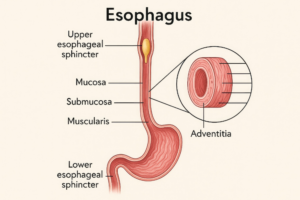
A perfect example of this is heartburn or acid reflux. Esophagus diagram labeling the different parts.The stomach has two circular muscles, one at the top and one at the bottom. The top muscle is called the lower esophageal sphincter (LES). It opens when we swallow food or liquids and should close once the contents enter the stomach. The bottom muscle is called the pyloric sphincter (PS). It opens when digested food leaves the stomach and enters the first part of the small intestine, the duodenum.

The LES receives its nerve supply from two sources:

  • The vagus nerve (cranial nerve X), which exits the base of the skull and runs directly in front of the first cervical vertebra (the atlas). This nerve causes the LES to relax so food can pass into the stomach, a parasympathetic action.
  • The T6–T9 spinal cord segments, which influence the celiac plexus, responsible for closing the LES, a sympathetic function.

When vertebrae become misaligned, called a subluxation, this can directly affect the nervous system’s ability to control and coordinate muscle function, including that of the LES and PS.

If the LES doesn’t close properly, stomach acid can escape into the esophagus, causing acid reflux or heartburn.

Of course, not all reflux is caused by spinal misalignment. Other contributing factors, such as pathogens like H. pylori, can also play a role. However, it’s important to evaluate spinal health as a possible contributor, and in some cases, the root cause. This may help avoid unnecessary medications that often come with unwanted side effects.

Let us help you!

This is just one example of how your spine can play a direct role in digestive health, and there are many more to explore. You can dig deeper on the PubMed website.

Let us help you with your digestive difficulties, chiropractic care, metabolic health, weight loss, and more.

Call us today at (970) 314-9244 or visit mtnvalleychiro.com for more information. We look forward to partnering with you on your journey to better health.

– Dr. Joe Heinecke